
Most Northwestern PA homeowners lack sewer backup insurance coverage. Learn why Category 3 water damage could cost you $15,000+ and how to protect your home today.
A $15,000 Surprise Waiting in Your Basement
Your homeowners insurance probably doesn’t cover the disaster you’re imagining right now.
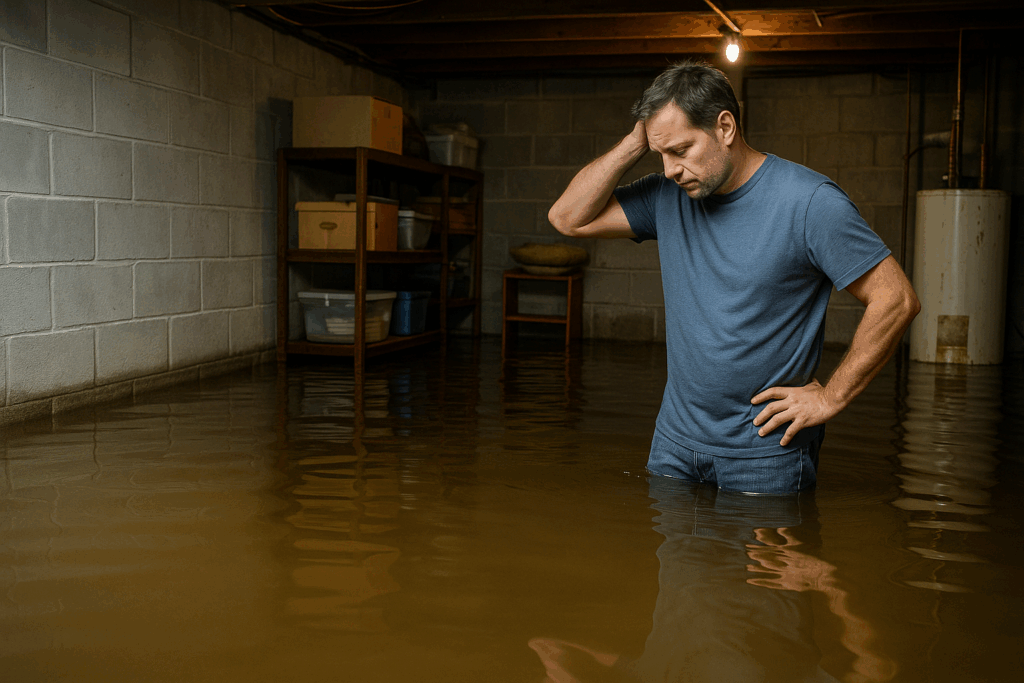
Picture this: Heavy rainfall hits Northwestern Pennsylvania. Your basement drain starts gurgling. Within hours, raw sewage backs up through your drains, flooding your finished basement with contaminated water. The cleanup bill? Anywhere from $5,000 to $16,000 or more.
Now here’s the devastating part: Most homeowners insurance policies won’t pay a single dollar of it.
If you’re a homeowner in Northwestern Pennsylvania—stretching into Eastern Ohio and Western New York—this isn’t a distant threat. It’s a reality that approximately 75,000 American families face every year, according to EPA estimates. And with our region’s aging infrastructure, you could be next.
The Hard Truth About Insurance Coverage in Our Region
Here’s what we’ve discovered working with hundreds of homeowners across Northwestern PA: the vast majority of residents either have no sewer backup coverage or are severely underinsured.
According to the Insurance Information Institute, most homeowners and business insurance policies do not include coverage for sewer backup damage unless it’s specifically added as an endorsement. This means that while you might be protected against fire, theft, or wind damage, the moment sewage enters your home through your plumbing system, you’re likely on your own.
Think you’re covered? Pull out your policy and check. We’re willing to bet that unless you explicitly added “sewer backup coverage” or “water backup coverage,” you’re exposed to thousands of dollars in potential losses.
Why Northwestern Pennsylvania Faces Higher Risk
Our region isn’t just any area—we’re dealing with some of the oldest infrastructure in the country. Here’s the reality:
Pennsylvania’s Aging Sewer Systems:
- The average age of most sewer systems across Pennsylvania is approaching 75 years
- Many pipes in our state are over 100 years old
- Some systems date back to the 1800s and have been operating for nearly 200 years
- Pennsylvania has more combined sewer overflows (CSOs) than any other state
What This Means for Your Home: In Northwestern PA, our freeze-thaw cycles put additional stress on already aging pipes. When ground shifts during temperature changes, it creates pressure on buried sewer lines. Combined with heavy spring rains and the sheer age of our infrastructure, the risk of sewer backup isn’t a question of “if”—it’s a question of “when.”
Pennsylvania faces an $8.4 billion funding gap over the next decade just to repair existing sewer systems. That means repairs to public infrastructure will be slow, and homeowners need to protect themselves now.
Understanding Category 3 Water Damage: The Worst-Case Scenario
Not all water damage is created equal. The restoration industry classifies water damage into three categories, and Category 3 is the most dangerous and expensive to remediate.
Category 3 Water (Black Water) includes:
- Raw sewage backups from toilets or sewer lines
- Water from rivers or streams during flooding
- Standing water that has developed bacterial growth
- Any water containing fecal matter, pathogens, or toxic substances
Why Category 3 Is So Serious: Category 3 water is grossly contaminated and contains harmful bacteria, viruses, fungi, and other pathogens. Exposure can cause severe illness, infections, respiratory problems, and allergic reactions. This isn’t water you can mop up yourself—it requires professional remediation with specialized equipment and protective gear.
Due to the extreme health risks involved, it is not recommended for untrained individuals to attempt Category 3 water damage cleanup. Without proper personal protective equipment and industrial-grade disinfectants, you’re putting your family’s health at serious risk.
The Clock Is Ticking: Once Category 3 water enters your home, mold can begin growing within 24 to 48 hours. Every hour that passes without professional remediation increases your health risks and your costs.
The Real Cost of Sewage Cleanup: Breaking Down the Numbers
Let’s talk dollars and cents, because this is where most homeowners get blindsided.
Category 3 Water Damage Cleanup Costs:
- Cleanup cost: Approximately $7 per square foot
- Damage repair costs: $11-14 per square foot and up
- Average total cost for severe events: $5,000 to $16,000+
- National average: Around $3,833
Real-World Example: If you have a 500-square-foot finished basement and experience a sewage backup:
- Cleanup alone: $3,500 (500 sq ft × $7)
- Repairs (drywall, flooring, trim): $5,500-7,000 (500 sq ft × $11-14)
- Replacement of damaged belongings: $1,000-5,000+
- Total potential cost: $10,000-$15,500 or more
And that’s for a relatively moderate incident. Severe backups affecting larger areas or requiring structural repairs can easily exceed $20,000.
Why Is Category 3 So Expensive? The costs are high because cleanup requires:
- Specialized extraction equipment for contaminated water
- Industrial-strength antimicrobial treatments
- Complete removal of porous materials (carpet, drywall, insulation)
- HEPA vacuuming and air scrubbing
- Proper disposal of contaminated materials
- Extensive structural drying and dehumidification
- Thorough sanitization of all affected surfaces
How Much Sewer Backup Insurance Do You Actually Need?
Here’s the good news: adding sewer backup coverage to your homeowners policy typically costs between $150 and $300 per year—that’s just $12-25 per month for protection against thousands in potential damages.
The challenge? Determining how much coverage you need.
Your Coverage Assessment Guide
Most insurance policies offer sewer backup coverage limits ranging from $5,000 to $25,000. Here’s how to calculate what you need:
Step 1: Calculate Your Baseline Coverage Need Basement square footage × $18-21 per sq ft (cleanup + repairs) = Minimum coverage
Example: 600 sq ft basement × $20 = $12,000 minimum
Step 2: Add the Value of Your Belongings What do you have in your basement?
- Finished living space with furniture
- Home office equipment
- Children’s play area and toys
- Storage items, seasonal decorations
- Appliances (washer, dryer, water heater)
- Irreplaceable items (photos, heirlooms)
Add an additional $3,000-$10,000+ depending on your belongings.
Step 3: Consider These Risk Factors
You Need MORE Coverage If:
- Your basement is fully finished and used as living space
- You have expensive belongings stored in the basement
- Your home is over 50 years old
- You’re in a neighborhood with documented sewer issues
- You have mature trees near your sewer line
- Your area has experienced backups in the past
- You have a combined sewer system in your municipality
Recommended Coverage Levels:
- Unfinished basement with minimal storage: $5,000-$10,000
- Partially finished basement: $10,000-$15,000
- Fully finished basement used as living space: $20,000-$25,000
Expert Insight: For most average homes in Northwestern PA with partially finished basements, we recommend at least $10,000 to $15,000 in coverage. For homes with fully finished basements, $25,000 is often more appropriate. The small additional premium for higher limits provides significantly more protection for a modest cost increase.
Common Causes of Sewer Backups in Our Area
Understanding what causes backups can help you assess your risk:
- Heavy Rainfall and Storm Events – When municipal systems become overwhelmed
- Tree Root Intrusion – Roots seek moisture and infiltrate aging pipes
- Aging Infrastructure – Cracked, collapsed, or deteriorating sewer lines
- Clogged or Blocked Lines – Buildup of grease, paper products, and debris
- Combined Sewer Overflows – Common in older PA municipalities
- Sump Pump Failure – During power outages or mechanical failure
- Municipal Main Line Issues – Problems beyond your property line
Critical: What Your Insurance WON’T Cover
Even with sewer backup coverage, understanding the limitations is essential:
Standard Policies DO NOT Cover:
- Damage from lack of maintenance
- Issues that developed over time due to neglect
- The sewer line itself (you may need separate service line coverage)
- Damage from municipal sewer system mismanagement (unless you have specific coverage)
- Sump pump replacement (only damage caused by failure)
Standard Policies WILL Cover:
- Damage to your home’s structure from covered backups
- Removal and disposal of contaminated water
- Cleaning and sanitization
- Damaged personal belongings
- Temporary housing if your home is uninhabitable
- Sewer line repair from your home to the city main (up to policy limits)
Red Flags: Warning Signs of Sewer Line Problems
Don’t wait for a disaster. Watch for these warning signs:
- Slow draining in multiple fixtures
- Gurgling sounds from drains or toilets
- Sewage odors inside or outside your home
- Water backing up in floor drains
- Multiple clogged drains at the same time
- Sewage in basement floor drains during heavy rain
- Lush patches of grass over your sewer line (indicating a leak)
- Foundation cracks or settling near sewer lines
If you notice any of these signs, act immediately. A small problem today could become a major Category 3 emergency tomorrow.
Why You Need Professional Help: The Insurance Claim Minefield
Here’s something most homeowners don’t realize until it’s too late: filing an insurance claim for sewer backup is complicated, and mistakes can cost you thousands in denied coverage.
Common Mistakes That Lead to Claim Denials:
- Failing to document damage properly before cleanup begins
- Not understanding the difference between coverage categories
- Missing critical deadlines for notification
- Improperly describing the cause of damage
- Starting repairs before the adjuster inspection
- Not having proper itemization of damaged belongings
- Inadequate photographic evidence
- Confusion about what’s covered under different policy sections
The Cost of Going It Alone: When you’re dealing with sewage in your basement, you’re stressed, overwhelmed, and under pressure to act quickly. That’s exactly when mistakes happen. A single error in your claim documentation could mean the difference between full coverage and a complete denial.
How Zehr Restorations Protects Northwestern PA Homeowners
We’ve seen too many families devastated not just by the sewage backup itself, but by the financial fallout of inadequate insurance coverage or botched claims. That’s why we’ve built our service around protecting you at every step.
Our Free Assessment Service
Before you even file a claim, we’ll come to your property and provide a completely free, no-obligation assessment to:
Determine If Filing Makes Sense:
- Evaluate the extent and category of damage
- Estimate total cleanup and repair costs
- Compare costs against your deductible
- Help you decide if a claim is financially beneficial
Why does this matter? If your damage is $3,500 and your deductible is $2,500, filing a claim might not make sense. We’ll help you make an informed decision before impacting your insurance history.
Assess Your Coverage Adequacy:
- Review your policy limits against actual damage
- Identify coverage gaps before you file
- Recommend whether additional documentation is needed
- Ensure you understand what will and won’t be covered
Direct Insurance Communication
Once you decide to file a claim, we become your advocate:
We Handle the Complex Communications:
- Direct dialogue with your insurance adjuster
- Proper documentation using industry-standard protocols
- Detailed scope of work that insurers understand
- Accurate categorization of damage (Category 1, 2, or 3)
- Professional photo and video documentation
- Itemized estimates in insurance-friendly formats
Preventing Costly Mistakes: Our team speaks “insurance language.” We know exactly what adjusters need to see, how to document properly, and what red flags to avoid. This expertise can mean the difference between full approval and partial denial.
Our Professional Team Gets It Done Right
Why Category 3 Demands Professionals:
- IICRC-certified water damage restoration specialists
- Specialized personal protective equipment for black water
- Industrial-grade extraction and drying equipment
- Antimicrobial treatments and HEPA air filtration
- Proper disposal of contaminated materials per EPA guidelines
- Structural moisture monitoring until completely dry
- Full sanitization and deodorization
Our Service Coverage:
- Northwestern Pennsylvania (primary service area)
- Eastern Ohio (approximately 30 miles from PA border)
- Western New York (approximately 30 miles from PA border)
- 24/7 emergency response available
Speed Matters: With Category 3 water damage, every hour counts. We respond quickly because we understand that delays increase both health risks and costs. Our goal is to minimize damage, protect your family’s health, and maximize your insurance recovery.
What to Do Right Now: Your Action Plan
Don’t wait until you’re standing in sewage to protect yourself. Take these steps today:
Immediate Actions (Do This Week):
1. Review Your Insurance Policy
- Pull out your homeowners policy
- Look for “sewer backup coverage” or “water backup coverage”
- Check your coverage limits
- Note your deductible
2. Contact Your Insurance Agent
- Ask specifically about sewer backup coverage
- Inquire about current coverage limits
- Get a quote to add or increase coverage
- Ask about service line coverage for your lateral
3. Assess Your Risk
- Determine the age of your home
- Check your municipality’s sewer system type
- Evaluate your basement’s finished status
- Calculate the value of belongings in your basement
4. Calculate Your Coverage Need
- Use our formula: (Square footage × $20) + belongings value
- Compare to your current limits
- Increase coverage if you’re underinsured
5. Save Our Number
- Store Zehr Restorations contact information in your phone
- Keep our number accessible for emergencies
- Share with family members who may need to call us
Preventive Measures:
- Schedule a professional plumbing inspection if your home is over 30 years old
- Install a backwater valve if you don’t have one
- Consider a battery backup for your sump pump
- Keep your sewer line clean with periodic professional cleaning
- Avoid planting trees directly over sewer lines
- Never flush anything except toilet paper
- Be mindful during heavy rain events
The Bottom Line: Protection Costs Less Than You Think
Let’s put this in perspective:
Annual cost of sewer backup insurance: $150-$300 Cost of Category 3 sewage cleanup without insurance: $5,000-$16,000+
For less than a dollar a day, you can protect yourself against a financial catastrophe that could wipe out your savings.
But here’s what we really want you to understand: This isn’t just about money. It’s about your family’s health, your peace of mind, and your ability to recover quickly when disaster strikes.
We’ve seen families displaced for weeks. We’ve seen life savings drained. We’ve seen irreplaceable possessions destroyed. And we’ve seen homeowners wish they had spent $200 a year to prevent a $15,000 nightmare.
Don’t Become a Statistic
With approximately 75,000 sewage backup incidents occurring annually in the United States, and Pennsylvania having more combined sewer overflows than any other state, the question isn’t whether backups will happen—it’s whether you’ll be prepared when they do.
Northwestern Pennsylvania’s aging infrastructure isn’t getting younger. Climate patterns are bringing more intense rainfall. The risk is real, and it’s growing.
Take Action Today
Step 1: Call your insurance agent right now and add sewer backup coverage to your policy.
Step 2: Calculate your proper coverage level using our guide.
Step 3: Save Zehr Restorations’ contact information for 24/7 emergency response.
Step 4: Consider scheduling a preventive plumbing inspection if your home has risk factors.
Free Assessment Available
If you’re concerned about your home’s risk or want a professional evaluation of your sewer system, Zehr Restorations offers free assessments throughout Northwestern Pennsylvania and into neighboring areas of Ohio and New York.
Our Free Assessment Includes:
- Visual inspection of potential problem areas
- Risk factor evaluation specific to your property
- Recommendations for preventive measures
- Insurance coverage consultation
- No-pressure, educational approach
We believe informed homeowners make better decisions. Whether you use our services or not, we want you to understand your risks and be properly protected.
When Disaster Strikes, We’re Ready
Sewage backup doesn’t wait for business hours. That’s why Zehr Restorations provides 24/7 emergency response throughout our service area.
When you call us during an emergency, here’s what happens:
- Immediate Response – We answer calls day or night
- Rapid Deployment – Our team mobilizes quickly to minimize damage
- Safety First – We secure the area and assess health risks
- Free Claim Evaluation – We determine if filing makes financial sense
- Insurance Coordination – If you file, we handle adjuster communication
- Professional Remediation – Complete Category 3 water damage restoration
- Follow-Through – We stay with you until your home is completely restored
You don’t have to face this alone.
Contact Zehr Restorations
Serving Northwestern Pennsylvania, Eastern Ohio, and Western New York
📞 24/7 Emergency Response: 814-315-3189
🌐 Website: www.zehrrestorations.com
📧 Email: help@zehrrestorations.com
Services:
- Category 1, 2, and 3 Water Damage Restoration
- Sewage Backup Cleanup and Remediation
- Mold Remediation
- Storm Damage
- Fire Damage
- Odor Removal
- Insurance Claim Assistance
- Free Damage Assessments
- 24/7 Emergency Response
Frequently Asked Questions
Q: Will adding sewer backup coverage raise my premium significantly?
A: No. Most homeowners pay between $150-$300 per year for this coverage—roughly $12-25 per month.
Q: I have a newer home. Do I still need this coverage?
A: Yes. While your home may be new, you’re still connected to municipal sewer systems that may be decades or even a century old. The age of public infrastructure affects you regardless of your home’s age.
Q: What if the backup is caused by the city’s sewer system?
A: Your sewer backup coverage typically protects you regardless of whether the problem originates on your property or in the municipal system. However, this is why reviewing your specific policy language is critical.
Q: Can I add sewer backup coverage after I’ve had a backup?
A: Generally, no. Insurance companies typically won’t add coverage for a known issue. You need to add this coverage before any incidents occur.
Q: Does homeowners insurance cover the cost to replace my sewer lateral?
A: Maybe. Standard sewer backup coverage typically covers interior damage but not the line itself. You may need separate “service line coverage” for the pipe.
Q: What’s the difference between sewer backup coverage and flood insurance?
A: Sewer backup coverage protects against water backing up through your plumbing system. Flood insurance covers rising water from external sources like rivers and rainfall. You may need both.
Q: Will making a claim increase my insurance rates?
A: It depends on your insurer and claims history. This is exactly why our free assessment is valuable—we help you determine if filing makes financial sense before you impact your insurance record.
A Final Word from Our Team
Over the years, we’ve responded to hundreds of water damage emergencies across Northwestern Pennsylvania. We’ve seen the stress, the confusion, and the financial burden that sewage backups create for families.
But we’ve also seen something else: we’ve seen properly insured homeowners recover quickly with minimal financial impact. We’ve seen families who took preventive action avoid disaster altogether. And we’ve seen the relief on homeowners’ faces when they realize their coverage will handle the catastrophe.
The difference between these outcomes often comes down to a single decision: whether to add $200 a year in sewer backup coverage to an insurance policy.
Don’t leave your family’s financial security to chance. Pennsylvania’s aging infrastructure guarantees that sewer backups will continue to impact homes across our region. The only question is whether your home will be protected when it happens.
Review your coverage. Increase your limits if needed. Save our number for emergencies.
Your future self will thank you.
Zehr Restorations LLC: Protecting Northwestern PA Homes When It Matters Most
This blog post is for informational purposes only and does not constitute insurance advice. Please consult with a licensed insurance professional to discuss your specific coverage needs and policy details.


